
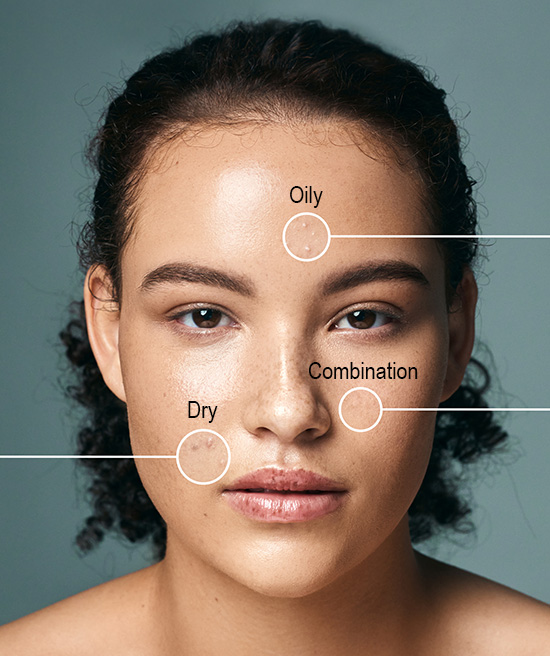
Identifying your skin type is a crucial step before choosing suitable skincare products and routines. However, your skin type isn't something that stays fixed. It can change over time with the influence of various internal as well as external factors like environmental factors, hormonal fluctuations, and even the products you use. Let's dive into the different skin types and how they can change in response to changes in your life and surroundings.
Before discussing what influences your skin type, it's helpful to understand the basic categories:
Your skin can shift depending on both internal and external factors. Let’s break down the major influences on your skin’s condition.
Your skin can be significantly impacted by the climate and environment you live in, leading to changes in its appearance, texture, and overall health.
Hormonal fluctuations can profoundly influence your skin type, leading to notable changes, such as increased oiliness or dryness, acne, or sensitivity, as hormone levels surge or decline during various life stages.
The skincare products you use can either support or disrupt your skin’s natural balance, potentially altering your skin type temporarily or long-term.
Over-exfoliation: While exfoliating can help remove dead skin cells, overdoing it can strip the skin’s protective barrier. This can lead to dryness, irritation, and sensitivity.
Heavy Moisturizers: Using rich, occlusive moisturizers on oily or combination skin can trap excess oil and clog pores, which may worsen breakouts and make your skin feel oilier over time.
Harsh Cleansers: Cleansers containing strong surfactants (like sodium lauryl sulfate) can strip away your skin’s natural oils, making dry skin even drier and potentially causing oily skin to produce more sebum in response.
Retinoids and Acids: Active ingredients like retinoids or exfoliating acids (such as AHAs or BHAs) can initially dry out the skin, but over time, they help regulate oil production. This is why retinoids are often beneficial for oily or acne-prone skin.
It’s important to pay attention to how your skin behaves and adjust your routine accordingly. Some signs that your skin type may be changing include:
Redness and irritation - when using new products may suggest that your skin is becoming more sensitive, possibly from a compromised skin barrier.
By being attentive to these signs, you can tweak your skincare routine to better suit your skin’s evolving needs.
Conclusion:
While understanding your skin type is crucial, it's equally important to remember that your skin is constantly evolving. Environmental conditions, hormonal fluctuations, and even the products you use can all influence your skin’s behaviour.
Regularly reassessing your skin and adjusting your skincare accordingly will help keep your skin healthy and balanced, no matter what changes come your way.
Staying mindful of these factors empowers you to make smarter skincare decisions, ensuring that your skin remains at its best over time.
1. Baumann LS. 88 The Baumann Skin Typing System. 2010.
2. Balato N, Ayala F, Megna M, Balato A, Patruno C. Climate change and skin. G Ital Dermatol Venereol. 2013;148(1):135-46.
3. Muizzuddin N, Marenus KD, Schnittger SF, Sullivan M, Maes DH. Effect of systemic hormonal cyclicity on skin. J Cosmet Sci. 2006;56(5):311-21.
4. Martinsen ØG, Grimnes S. Long-term effect of some skin moisturizers. Open Dermatol J. 2008;2:87-9
