
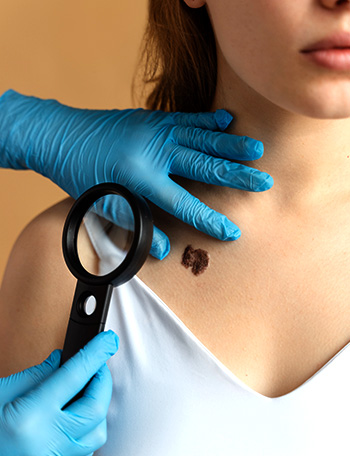
With increasing awareness about skin cancers, more people are visiting clinics to have skin growths examined. These concerns can range from small growths on the neck and face to lesions anywhere on the body. A skin biopsy is a simple diagnostic procedure performed in a doctor's office that helps identify and diagnose various skin conditions. It's a quick, outpatient procedure requiring no hospital admission, making it convenient and accessible for patients.
The procedure utilizes a specialized instrument called a punch biopsy tool. This pen-like instrument has a circular sharp cutting edge that precisely removes a small sample of skin tissue. The size of the sample is typically 2-3 mm, just enough to provide pathologists with sufficient tissue for examination. This sample includes all layers of skin necessary for accurate diagnosis. Once collected, the tissue sample is carefully preserved and sent to a pathology laboratory for detailed microscopic examination (histopathology) to determine the exact nature of the growth.
Before the biopsy, the area is cleaned and usually numbed with a local anesthetic. The doctor then gently places the punch tool perpendicular to the skin's surface and rotates it to obtain the sample. The entire process is quick and precise, with minimal discomfort to the patient.
A skin biopsy is remarkably brief, usually completed within 15-20 minutes from start to finish. This includes the time needed for local anesthesia, specimen collection, and basic wound care. The quick turnaround time makes it convenient for patients to fit the procedure into their busy schedules.
Various biopsy methods are used based on the lesion type, including tangential cutting with scissors, curettage with a curette, shave biopsies, punch biopsies, and elliptical biopsies (either incisional or excisional) to remove lesions fully or partially.
The procedure is remarkably safe with minimal risk of complications. Unlike more invasive surgical procedures, a skin biopsy doesn't require elaborate aftercare. There's no need for complex dressing changes, suture removal, or stitching of the skin. The small size of the biopsy site allows for natural healing with minimal scarring.
If you notice new or changing skin growths, unusual spots or moles, or persistent skin conditions that don’t respond to treatment, it’s important to consult a dermatologist. Additionally, any concerning changes in existing skin lesions warrant a closer look by a professional. A dermatologist can assess these areas and determine whether a skin biopsy is needed to ensure an accurate diagnosis.
After the biopsy, you will experience slight tenderness at the site for a day or two. A small scab will form and eventually fall off as the area heals, so it’s important to keep the site clean and dry. Most people can resume their normal activities immediately, and biopsy results are typically available within a few days to a week.
Although the procedure is straightforward, follow-up care is usually recommended. Your doctor will provide specific care instructions and schedule a follow-up visit to discuss the results. They will also recommend any additional testing or treatment if necessary and will be available to address any concerns you have about the healing process.
A skin biopsy is a quick, safe, and essential diagnostic tool in modern dermatology. It provides valuable information about skin conditions while being minimally invasive. The procedure's simplicity, combined with its diagnostic value, makes it an invaluable tool for maintaining skin health. If you have concerns about any skin growth, don't hesitate to consult your dermatologist – the procedure is simple, virtually painless, and can provide crucial information about your skin health.
Seia Z, Musso L, Palazzini S, Bertero M. Skin Biopsy Procedures: How and Where to Perform a Proper Biopsy. Skin Biopsy–Perspectives. 2011 Nov 2.
2. Llamas-Velasco M, Paredes BE. Basic concepts in skin biopsy. Part I. Actas Dermo-Sifiliográficas (English Edition). 2012 Jan 1;103(1):12-20.
3. Greenwood JD, Merry SP, Boswell CL. Skin biopsy techniques. Primary Care: Clinics in Office Practice. 2022 Mar 1;49(1):1-22.
4. Yang SH, Qi J, Esandrio J, Leung S, Taube JM, Garza LA, Allen R, Kang S, Chien AL. Efficacy and tolerability of a novel biopsy device for removing benign epidermal skin lesions. Dermatologic Surgery. 2015 Nov 1;41(11):1264-73.
