
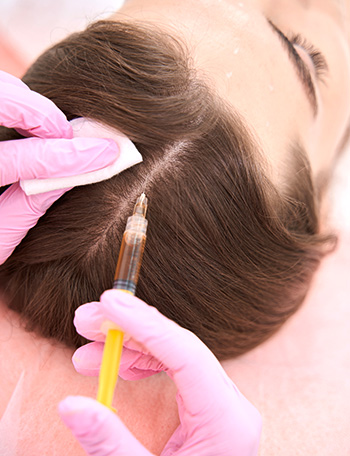
Platelet-Rich Plasma (PRP) therapy has gained recognition as an innovative prp hair treatment for various types of hair loss, ranging from excessive shedding to receding hairlines. This approach harnesses the body’s natural healing processes to stimulate hair growth and enhance scalp health.
If you're interested in more insightful videos, we also have a short video on 'Vampire Facial PRP Treatment for Face' Click here to view it!
PRP is derived from the patient's own blood, making it a completely natural and biocompatible treatment. The process begins with drawing 8-20 ml of blood, which is then placed in specialized tubes and undergoes centrifugation. During this process, the blood is spun at high speeds, separating it into distinct layers, with the golden plasma rich in platelets floating to the top. This concentrated plasma contains vital growth factors that act as natural fertilizers for hair follicles.
When platelets are activated, they release growth factors that work at the molecular level to promote hair growth. These growth factors stimulate the hair follicle's stem cells, improve blood supply to the follicles, and prolong the anagen (growth) phase of the hair cycle. This process helps strengthen existing hair while potentially activating dormant follicles.
PRP can be administered in two primary ways. The first method involves topical application followed by derma rolling or microneedling to enhance penetration. The second, more invasive but potentially more effective method, involves direct injection into the scalp. The treatment typically follows a schedule of monthly sessions for 3-4 months, followed by maintenance sessions every six months.
While the procedure may cause some discomfort, various pain management techniques are employed. A topical anesthetic is applied 45-60 minutes before the procedure. For patients with sensitive scalps, injectable local anesthesia may be used. Some patients might experience mild headaches post-treatment, which can be managed with over-the-counter pain medication.
One of PRP's significant advantages is its compatibility with other hair loss treatments. It can be effectively combined with minoxidil applications, peptide treatments, and oral medications, creating a comprehensive approach to hair restoration. This versatility allows for customized PRP hair treatment plans based on individual needs and response patterns.
PRP is remarkably safe, primarily because it uses the patient's own blood, eliminating the risk of allergic reactions or rejection. There's no downtime associated with the PRP hair treatment – patients can resume normal activities, including sports, immediately after the procedure. The treatment doesn't require specialized facilities or operation theaters, making it accessible in most dermatology clinics.
PRP hair treatment results typically become visible after several sessions, with improvements in hair density, thickness, and overall scalp health. The efficacy can vary among individuals, influenced by factors such as age, the underlying cause of hair loss, and overall health status. Regular maintenance sessions help sustain the results over time.
PRP therapy represents a significant advancement in hair restoration, offering a natural approach that harnesses the body's own healing mechanisms. While not a miracle cure, it provides a safe, effective option for those seeking to address hair loss, particularly when combined with other treatments. Success relies on proper technique, consistent treatment protocols, and realistic expectations from dermatologists and patients.
