
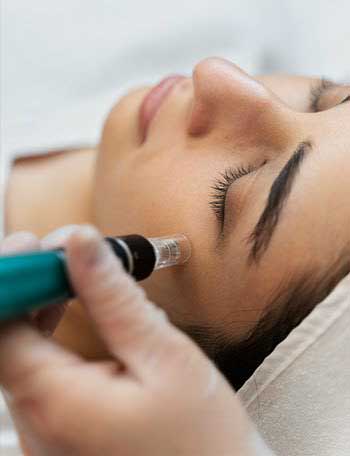
Have you ever looked in the mirror and wished you could turn back the clock on your skin? Well, you're not alone. Many of us struggle with skin issues that can really knock our confidence. In the evolving world of dermatology and cosmetic treatments, Microneedling RF (Radiofrequency) is a groundbreaking technique for skin rejuvenation.
This innovative procedure gives the benefits of traditional microneedling with the power of radiofrequency energy, offering an all-in-one solution for various skin concerns. Let's focus on this in more detail.
Microneedling RF treatment is an advanced version of the traditional microneedling procedure. At its core, it uses a device with very tiny needles to penetrate the skin and radiofrequency technology. Below two methods work together to improve the overall results are as follows:
Above two-part approach makes complete skin rejuvenation possible, which treats superficial flaws and underlying structural problems.
Microneedling RF is an effective treatment for various skin issues, including acne scars, fine lines and wrinkles, stretch marks, enlarged pores, uneven skin texture, and skin laxity.
Microneedling RF is a less invasive option than traditional treatments, with minimal downtime and suitable for all skin types. The tiny channels created during the procedure help the skin absorb products better, which may make skincare more effective.
Plus, the natural-looking results improve over time as the body’s healing process kicks in.
Microneedling RF sessions typically last between 30 minutes and an hour, depending on the treatment area. Before the procedure, the skin is cleansed, and a numbing cream may be applied.
During the treatment, a device with tiny needles is passed over the skin, simultaneously delivering radiofrequency (RF) energy. After the treatment, a soothing serum or mask is applied to calm the skin. Patients may experience some redness and mild inflammation immediately after the treatment for a few days.
It's important to follow post-treatment care instructions, including sun protection and gentle skincare, to optimize overall results and minimize any potential side effects.
Typically, 3-4 sessions are recommended, spaced 4-6 weeks apart. Individual treatment plans may vary based on specific skin concerns and goals.
Initial improvements are visible within weeks of the first session, but full results develop over several months as collagen and elastin production increases.
Patients often report significant improvements in skin texture, firmness, and overall appearance after completing the full treatment series.
While microneedling RF is generally considered safe for most individuals, it's not suitable for everyone. People with active skin infections, certain skin conditions, or a history of keloid scarring should avoid this treatment.
It's also important to note that while it can be used on various skin types, those with darker skin tones should seek treatment from experienced practitioners to minimize the risk of post-inflammatory hyperpigmentation.
Microneedling RF represents a significant step forward in non-invasive skin regeneration. It combines the collagen-boosting power of microneedling with the deep-heating effects of radiofrequency, effectively addressing a wide range of skin concerns. This therapy has been shown effective in decreasing acne scars, fine wrinkles, and enhancing skin texture and firmness.
Like all cosmetic treatments, it's crucial to keep expectations realistic and remember that results can differ for each person. Consulting a skilled practitioner will help determine if Microneedling Treatment suits your specific skin needs. It's a great option for improving skin health and appearance, offering a good balance of effectiveness and fast recovery that many people appreciate.
1. Liu Y, Yu W, Zhu J, Cen Q, Zhou L, Ma G, et al. Facial tightening using a novel vacuum‐assisted microneedle fractional radiofrequency system: A prospective, randomized, split‐face study. Journal of Cosmetic Dermatology [Internet]. 2024 Jun 24; Available from: https://doi.org/10.1111/jocd.16414
2. Lyu J, Jiang L, Tang M, Zheng L, Liu S. Microneedle fractional radiofrequency associated with drug delivery for facial atrophic acne scars and skin rejuvenation. Journal of Cosmetic and Laser Therapy [Internet]. 2024 Jun 29;1–8. Available from: https://doi.org/10.1080/14764172.2024.2372342
3. Ramaut L, Hoeksema H, Pirayesh A, Stillaert F, Monstrey S. Microneedling: Where do we stand now? A systematic review of the literature. Journal of Plastic Reconstructive & Aesthetic Surgery [Internet]. 2018 Jan 1;71(1):1–14. Available from: https://doi.org/10.1016/j.bjps.2017.06.006
4. Seo KY, Yoon MS, Kim DH, Lee HJ. Skin rejuvenation by microneedle fractional radiofrequency treatment in Asian skin; Clinical and histological analysis. Lasers in Surgery and Medicine [Internet]. 2012 Aug 30;44(8):631–6. Available from: https://doi.org/10.1002/lsm.22071
