
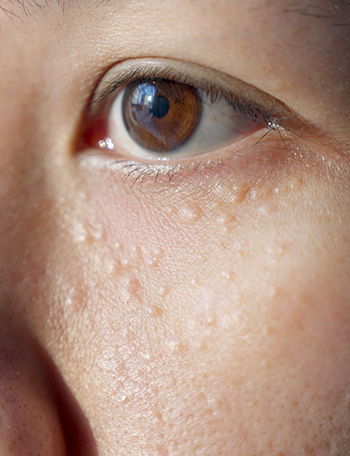
Ever woken up, looked in the mirror, and noticed small, white bumps on your skin that seemed impossible to get rid of? Chances are, you're dealing with milia, those tiny, pearl-like cysts that can be surprisingly persistent. Though they’re common among adults, milia are often misunderstood and overlooked when it comes to skincare. In this comprehensive guide, we’ll dive into everything you need to know about milia, including what they are, how they form, why they appear, and most importantly, how you can treat and prevent them from making a comeback.
Milia are small, dome-shaped bumps that form on the surface of your skin. They're typically 1-2 millimetres in size, and you might notice them as white or yellowish cysts. These tiny bumps are filled with keratin, the same protein that makes up your hair, skin, and nails. While milia can show up anywhere on your body, they're most commonly found on your face, especially around the eyes, cheeks, and forehead.
Milia are often confused with acne or whiteheads, but they’re a different story altogether. Unlike pimples, which involve inflammation and are often caused by bacteria or excess oil, milia are harmless cysts that don’t cause any pain or swelling. However, their stubborn nature makes them a frustrating skincare issue for many people.
Understanding why milia form is the key to treating them effectively. Milia develops when keratin, a protein naturally found in your skin gets trapped beneath the skin’s surface. This can happen for several reasons:
1. Dead skin cells: When your skin doesn’t shed dead cells properly, they can clog pores, causing the keratin to build up and form milia.
2. Skin damage: Things like burns, sun damage, or injuries can change your skin’s structure, making it more likely for milia to develop. Skin that’s been compromised in any way is often more prone to these small cysts.
3. Heavy skincare products: Using thick, oil-based creams or other heavy skincare products can contribute to clogged pores, trapping keratin beneath the skin’s surface and leading to milia formation.
4. Underlying conditions: Certain skin conditions, such as lichen planus or bullous pemphigoid, can make you more likely to develop milia, as your skin’s ability to shed and renew itself is disrupted.
Milia come in different forms, and each type can have unique characteristics. Understanding which type you’re dealing with can help you choose the best treatment options:
1. Primary milia: The most common form, these appear spontaneously on healthy skin, often without any clear cause. They’re typically found on the face but can appear elsewhere.
2. Secondary milia: These form after skin trauma, such as burns or rashes, or as a side effect of other skin conditions. Essentially, they develop as a response to damage or irritation.
3. Milia en plaque: A rarer form of milia that tends to cluster together on inflamed or raised patches of skin. When they show up, they often do so dramatically and can be difficult to treat with standard methods.
4. Multiple eruptive milia: This type involves numerous bumps that suddenly appear over a short period of time, often on the face, upper arms, or torso. These are less common and may require a different approach to treatment due to the rapid onset.
It’s easy to confuse milia with other skin conditions like whiteheads or acne. Here’s how you can tell the difference:
1. Texture and firmness: Milia are firm to the touch, almost pearl-like, while whiteheads are softer and may be more easily "popped." This firmness makes Milia stand out.
2. No extraction: Unlike acne or whiteheads, you can’t simply pop or squeeze out milia. Attempting to do so could damage your skin and cause scarring.
3. No redness or inflammation: Milia doesn't cause the redness, swelling, or pain that acne can. They remain small, white bumps without any signs of infection or irritation.
4. Location: While acne can show up almost anywhere on your body, milia most commonly appears around the eyes, nose, and cheeks, where the skin is thinner.
Despite being common, milia often go untreated, and there are several reasons why this happens:
1. They’re harmless: Since milia don’t pose any health risks, they’re often seen as a minor cosmetic issue rather than a condition that requires urgent treatment.
2. Misidentification: Many people mistake milia for acne or whiteheads and try treating them with acne products that don’t work. This can lead to frustration and, in some cases, further skin irritation.
3. Slow development: Milia can develop gradually over time, so people may not notice them until they’ve become more pronounced. By then, they may have tried ineffective treatments or ignored them altogether.
4. Perception of cost and necessity: Professional treatments for milia, such as extractions or laser therapy, may be perceived as unnecessary or too expensive for what seems like a cosmetic concern, leading people to put off treatment.
The good news is that while milia can be stubborn, there are several ways to manage and treat them:
1. Professional extraction: A dermatologist can remove milia using sterile tools. This typically involves making a small incision in the skin and extracting the cyst in a controlled manner, which minimises the risk of scarring. (1)
2. Topical retinoids: Prescription retinoids, such as tretinoin, can help increase skin cell turnover, preventing new milia from forming and reducing existing ones. Retinoids are powerful skincare ingredients that can significantly improve skin texture and appearance over time. (2)
3. Microdermabrasion: This non-invasive treatment exfoliates the skin, helping to remove dead skin cells and potentially prevent the development of milia. It’s a gentler approach than a chemical peel and can be done regularly. (3)
4. Laser therapy: Certain laser treatments, like fractional CO2 lasers, can target and treat milia effectively. These lasers help to break down the cysts and encourage healthy skin regeneration. (4)
5. Electrodesiccation or electrocautery: This procedure uses an electric needle to destroy the milia. It’s a more precise approach that can be very effective, especially for treating stubborn or numerous milia. (5)
Preventing milia from forming is often easier than treating them. Here are a few simple strategies that can make a big difference:
1. Gentle exfoliation: Incorporating gentle exfoliants, such as salicylic acid or glycolic acid, into your routine can help prevent dead skin cells from clogging your pores. Be careful not to overdo it. Over-exfoliation can irritate your skin.
2. Daily sun protection: UV damage can contribute to secondary milia, so applying sunscreen daily is essential. Look for a broad-spectrum sunscreen with at least SPF 30 to protect your skin from harmful rays.
3. Use non-comedogenic skincare products: Make sure the products you’re using, especially around the eye area, are non-comedogenic, meaning they won’t clog your pores. This is especially important if you have oily or combination skin.
4. Keep a consistent skincare routine: Regular cleansing and moisturising can help keep your skin balanced and healthy, making it less prone to developing milia. Choose products that suit your skin type and avoid heavy creams that can block pores.
While milia are generally harmless, there are times when you should consider seeing a dermatologist. You might need professional help if:
Conclusion:
Milia may be small, but they can have a big impact on how you feel about your skin. By understanding what causes them and learning about the available treatment options, you can take control and manage these pesky bumps more effectively. Everyone’s skin is different, so it may take some trial and error to find what works best for you. But remember, if you're unsure or struggling to get rid of milia, don’t hesitate to consult a dermatologist for personalised advice and treatment.
With a little patience and the right approach, you can keep your skin looking healthy and milia-free, allowing you to feel confident in your skincare routine once again.
Thami G, Gurvinder Pal et al. Surgical pearl: enucleation of milia with a disposable hypodermic needle. J Am Acad Dermatol. 2002;47(4):602-3.
