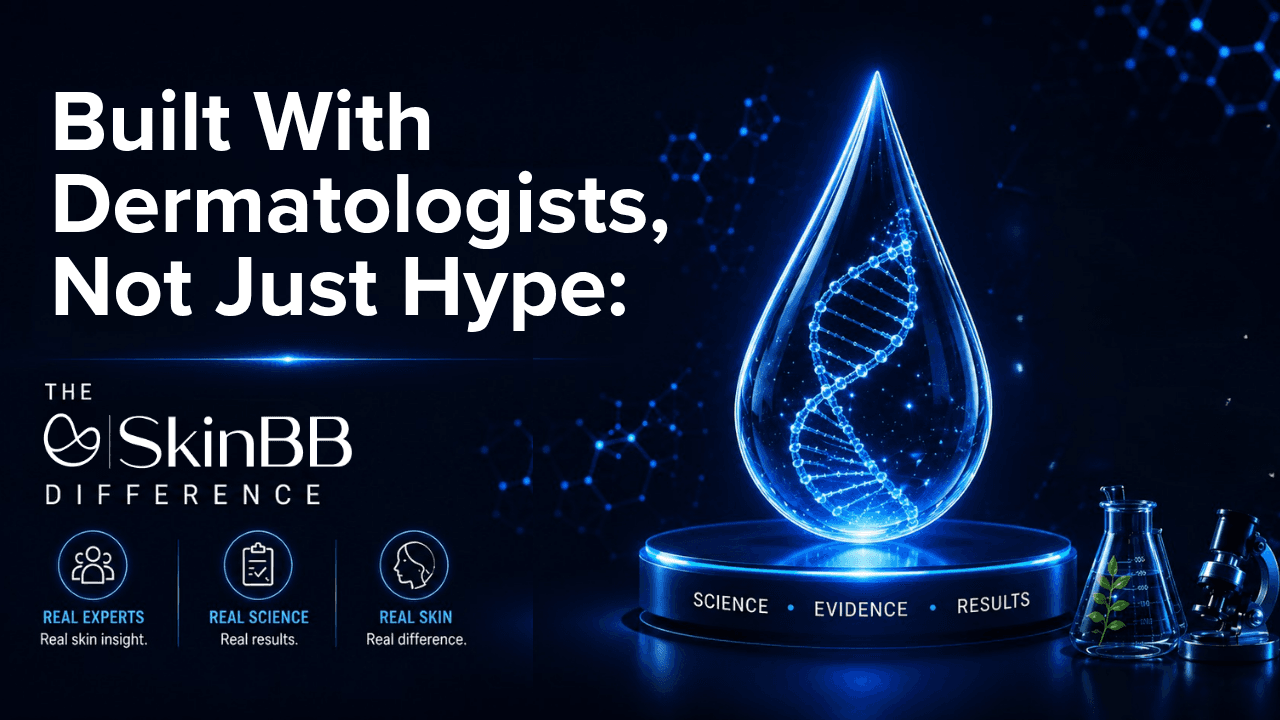
Every day, someone with excellent lighting, perfect skin, and significant social media following delivers skincare advice with absolute certainty. They've never studied dermatology. They may not understand basic skin biology. Yet they have millions of followers absorbing their recommendations as gospel. This is the defining crisis of modern skincare education: we've abdicated expertise to aesthetics, knowledge to likeability, and evidence to narrative.
The mathematics of this crisis are stark. A dermatologist with decades of clinical experience might have a modest social following. Meanwhile, someone with good skin and excellent makeup application has millions of followers. The attention economy rewards entertainment over expertise, confident oversimplification over qualified nuance, and monetizable product partnerships over treatments that genuinely work. This isn't neutral. It's the erosion of accountability in an industry that directly impacts people's health and spending.
A board-certified dermatologist completes years of medical training and maintains continuous education throughout their career, developing expertise that influencers cannot possess at scale. They understand skin biology with depth that transcends marketing language, distinguishing between mechanisms that look identical on a label but behave completely differently on skin. They also possess negative knowledge: an understanding of what doesn't work, what backfires, and under what conditions treatments harm rather than help.
Most critically, dermatologists understand that skincare isn't one-size-fits-all. Someone with rosacea requires a fundamentally different approach than someone with acne vulgaris. Someone with compromised barrier function cannot tolerate what works for naturally resilient skin. A dermatologist asks detailed questions before recommending anything; they practice differential diagnosis applied to skincare, not universal templates applied indiscriminately.
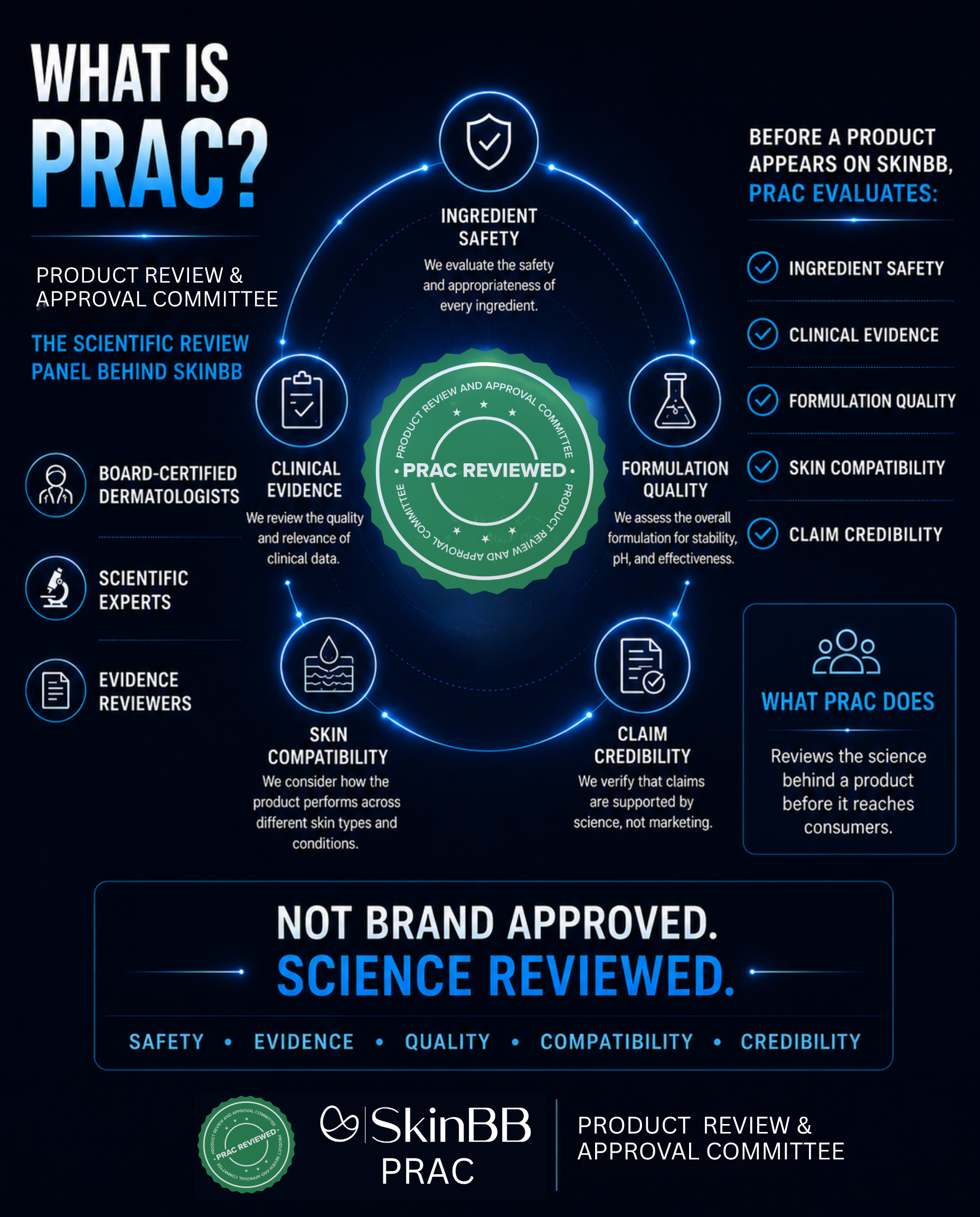
SkinBB's Product Review & Approval Council consists of board-certified dermatologists with genuine clinical expertise across acneiform conditions, barrier dysfunction, and sensitive skin. The PRAC examines not just ingredient lists but actual concentrations, formulation context, and ingredient interactions. A product containing niacinamide at 2% has a different clinical profile than one at 5%, and the PRAC specifies this because concentration determines efficacy.
Most skincare recommendations work from superficial classification: oily, dry, combination. These categories are reductive, ignoring environmental factors, genetic predisposition, and individual inflammatory patterns. The HLHP Engine gathers actual data about your skin characteristics, lifestyle, and concerns to generate a personalized profile that becomes the foundation for recommendations tailored to your real situation, not a generic template.
LabelLooker translates ingredient lists into human language, showing concentration and likely efficacy rather than marketing claims. ClinicalLens connects you to peer-reviewed research instead of anecdote. The RxFx Show takes dermatologist expertise and makes it conversational, permitting genuine nuance and qualified uncertainty that influencer culture cannot tolerate.
Conventional influencer-driven skincare creates misaligned incentives: recommending twelve products is more monetizable than recommending one simple, effective product. SkinBB inverts this. Trust has commercial value here. If recommendations work, people return; if they disappoint, that damages credibility more than any single partnership would. The model only succeeds if recommendations are genuinely accurate, which keeps the incentives aligned with your actual skin health.
1. If dermatologists are so much better at recommendations than influencers, why don't people just see a dermatologist?
Access and availability are limiting factors. A dermatologist appointment can be expensive with a long wait, providing limited consultation time. SkinBB complements dermatology by providing continuous, accessible, personalized guidance between appointments, or scalable dermatological-quality guidance for those without easy access to a dermatologist at all.
2. Can the PRAC actually guarantee a product will work for my specific skin?
No product guarantees individual results because skin biology varies by genetics, microbiome, and environment. What PRAC verification guarantees is that a product contains what it claims at efficacious concentrations, formulated to preserve ingredient stability. It eliminates categories of products that don't work for anybody, even if individual results still vary.
3. Doesn't dermatological backing just make SkinBB another form of marketing?
There's a real distinction between using credibility for marketing versus genuinely incorporating dermatological review into every recommendation. SkinBB's model requires dermatologists to actively evaluate products and revise recommendations as research evolves. Skepticism toward any brand-backed claim is reasonable, but it can be resolved through transparent tools like LabelLooker and ClinicalLens.
4. What if I disagree with a PRAC recommendation or find something that works better for me?
You retain complete autonomy. PRAC recommendations reflect clinical evidence and formulation quality, but individual skin can respond differently due to microbiome or genetics. The tools support analyzing why an alternative might be superior for your specific situation; the framework improves decision-making rather than enforcing one-size-fits-all rules.
5. How do I know PRAC dermatologists aren't just paid to recommend certain brands?
PRAC members are practicing dermatologists with established reputations, not retired physicians hired as brand ambassadors. Their recommendations must reflect clinical efficacy, and the entire model depends on PRAC credibility, since recommendations shown to be commercially biased would undermine the very value proposition the platform is built on.
